Radon Mitigation Systems
Active soil depressurization systems for basements, slabs, and walkouts, installed by Colorado state-licensed mitigation pros to ANSI/AARST SGM-SF-2023.
Typical$1,400-$2,600
About half of Fort Collins homes test at or above the EPA action level, and Larimer County averages six times the national figure. Every install here is performed by a Colorado state-licensed, NRPP or NRSB certified mitigation pro, with a fixed written quote first and a verification retest after.
Step 1
Call or text with your test result, or with no result yet. We sort out whether you need a test, a retest, or a quote, in plain terms.
Step 2
A Colorado-licensed mitigation pro walks the foundation, checks the sump and any rough-in pipe, and puts a fixed price in writing with the license number on it.
Step 3
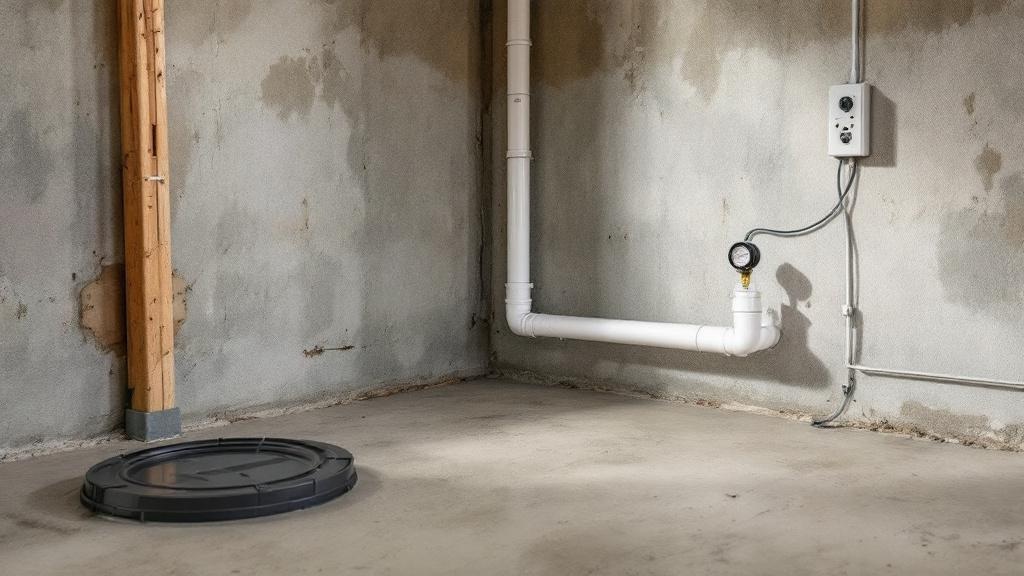
Most basement and slab systems go in within a working day, built to ANSI/AARST SGM-SF-2023, with the gauge marked at its startup reading.
Step 4
A post-install measurement of at least 48 hours, placed where the first test sat, so you hold a written before and after.
Average indoor radon in Larimer County, against a national average of 1.3. The EPA action level is 4.0.
Share of Fort Collins homes that test at or above the EPA action level of 4 pCi/L.
Highest indoor radon result recorded in Larimer County, nearly 300 times the action level.
Larimer County homes average 7.8 pCi/L against 1.3 nationally, with a recorded maximum of 1,147 pCi/L.
About half of Fort Collins homes test at or above 4 pCi/L.
CDPHE treats all 64 Colorado counties as high radon risk; about half of Colorado homes test elevated, with a statewide average near 6.4 pCi/L.
Larimer and Weld counties are EPA Radon Zone 1.
Colorado has required a state license for radon measurement and mitigation since July 1, 2022 (C.R.S. Title 12, Article 165).
Uranium-bearing Front Range crystalline rocks, sediments derived from them, and uraniferous Cretaceous shales drive radon potential in the region.
State-by-state radon policy and testing data, including Colorado.
Every job comes with a written quote and no-pressure consultation. Workmanship warranty terms are set by your lead technician and confirmed before work begins.
Active soil depressurization systems for basements, slabs, and walkouts, installed by Colorado state-licensed mitigation pros to ANSI/AARST SGM-SF-2023.
Professional short-term and long-term radon measurement by Colorado-licensed testers, for purchases, retests, and first looks.
Sealed-membrane sub-membrane depressurization for crawl spaces, older Laporte and Berthoud stock, and mixed-foundation homes.
Transaction testing and deadline-driven mitigation for northern Colorado purchases, scheduled backward from closing.
Multifamily, school, daycare, and commercial buildings, measured and mitigated under the large-building AARST standards.
Fan replacement, gauge and seal repair, and retesting for radon systems that have gone quiet, loud, or ineffective.
Most radon pages lean on a zone map. This market has better: local measurements. Larimer County's health department reports an average indoor level of 7.8 pCi/L, roughly six times the national 1.3, and a recorded high of 1,147. The City of Fort Collins reports that about half of homes in town test at or above the EPA's action level of 4. Statewide, CDPHE treats all 64 counties as high risk.
The rock explains it. The USGS traces northern Colorado's radon to uranium-bearing Front Range granites, the sand and gravel those mountains shed across the plains, and uranium-rich Cretaceous shales along the basin edge. Fort Collins, Loveland, and Greeley all sit on some version of that ground.
Averages still say nothing about one address. The county and town table collects what is measured and where the housing changes the picture.
Colorado regulates this work directly now. Since July 1, 2022, under C.R.S. Title 12, Article 165, anyone paid to measure or mitigate radon must hold a license from DORA's Office of Radon Professionals, and that license requires current NRPP or NRSB certification underneath it. The point is accountability: a license can be looked up, and it can be disciplined.
All contractors you work with here hold the DORA license and national certification, and installs follow ANSI/AARST SGM-SF-2023. The quote carries the license number, so you can check it before you sign rather than after.
Our walkthrough on verifying a Colorado radon license takes about two minutes to follow.
With about half of Fort Collins homes at or above the action level, a high result during inspection is ordinary here, not a red flag about the house. Buyers usually test in the inspection period with a licensed tester using tamper controls, and a result of 4 or more becomes an objection item like any other repair.
What settles the item fastest is paper: a fixed written quote from a licensed pro before the objection deadline, then either an install with a verification retest before closing or a credit sized to that quote. Sellers who already have a documented system and a recent low retest usually skip the conversation entirely.
See real estate radon services for how the timeline is built backward from closing.
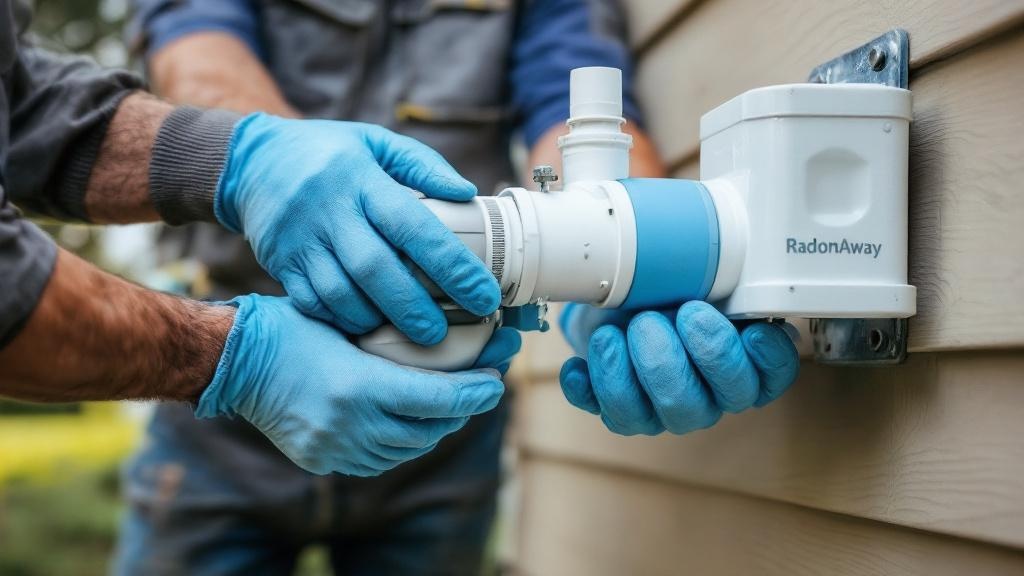
A finished system asks very little. Glance at the U-tube gauge now and then and compare it with the startup mark; a column drifting toward level means the fan is losing ground. The fan itself lives in the attic or outdoors, never in the basement, and the EPA notes that many run five years or more before needing replacement.
Two northern Colorado habits keep a system honest. Reseal the sump lid after any pump work, and retest every two years in the heating season, plus after a basement finish, waterproofing, or furnace replacement. Cold exterior runs can collect condensation, so a new gurgle after a cold snap deserves a look.
If anything drifts, the repair service covers fans, gauges, seals, and the retest afterward.
Fort Collins and northern Colorado and surrounding communities. Same-day estimates within 11+ neighborhoods.
Share your test result and foundation type and we will reply with a price range the same business day. Every install is performed by a Colorado-licensed, NRPP or NRSB certified mitigation pro, with a fixed written quote after the assessment.
Browse all 44 questions for more depth.
Most Fort Collins-area basement and slab homes land between $1,400 and $2,600 for an active system. Crawl space membrane systems run $2,000 to $3,800, and activating a builder's passive pipe runs $800 to $1,300. A professional test is $150 to $275.
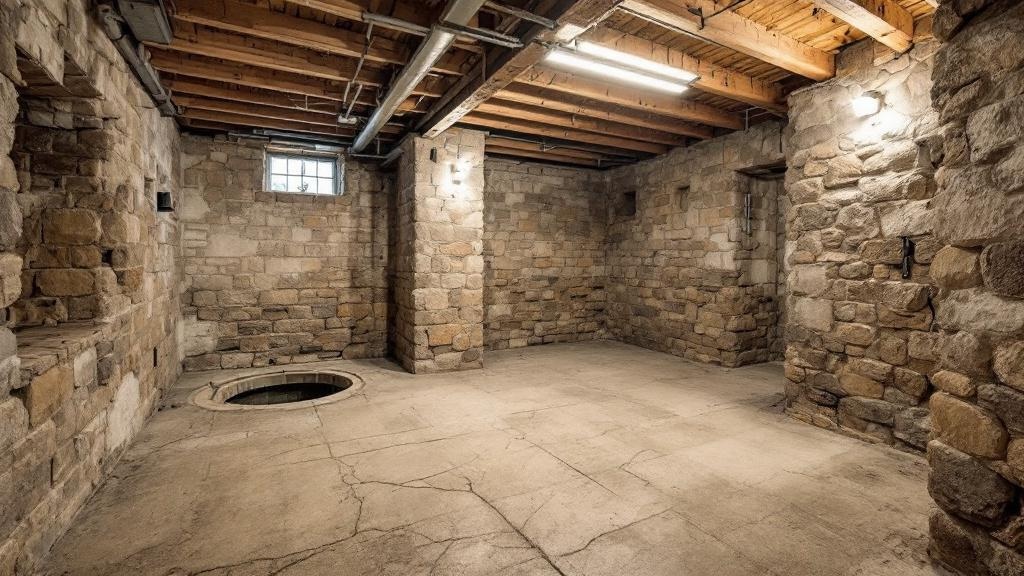
The house, not the town, decides where you fall in the band. A Timnath two-story with a clean poured basement and a correctly run rough-in sits at the bottom, often in activation territory. A Loveland tri-level needing suction on two levels, or an Old Town cellar with a patched floor and heavy sealing scope, sits at the top. Mixed foundations, a basement wing plus a crawl, push into the $2,800 to $4,800 tier because two different systems share one fan or get one each. Every quote here is written and fixed before work starts, and it names the suction-point count and discharge route so a second bid can be compared line for line. The cost guide by house type breaks the tiers down.
A professional short-term test runs $150 to $275 in the Fort Collins area. Hardware-store charcoal kits cost $15 to $30 plus lab fees, and CDPHE's radon program page explains how Colorado residents can find a test kit.
The price difference buys protocol. A professional test uses a calibrated device placed to the ANSI/AARST measurement standard, documents closed-house conditions, and produces a written report that holds up in a real estate transaction, where Colorado requires the tester to hold a DORA measurement license anyway. A self-test kit is a fine screening tool for your own curiosity, and a high kit result is worth believing enough to follow up. What a kit cannot do is anchor a negotiation or verify a mitigation system for a sale. Use the cheap test to decide whether you have a question; use the licensed test when the answer has money or a contract attached. See testing your own home.
Adding a fan, gauge, and proper discharge to a correctly run builder rough-in costs $800 to $1,300 here, the least expensive full fix on our price list. The catch: the rough-in has to have been run correctly, and not all were.
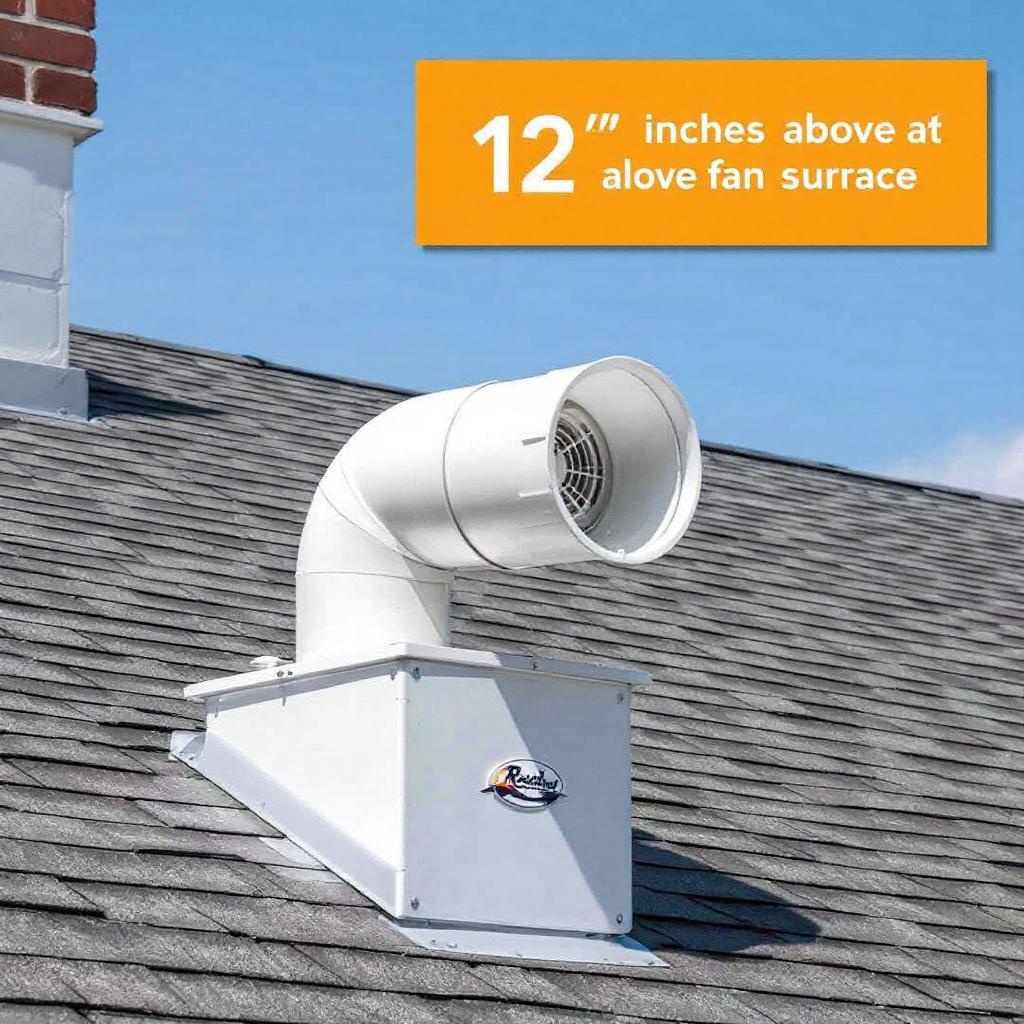
Builders across Timnath, Windsor, and Severance commonly rough in a vertical pipe from a sub-slab gravel bed to the attic or roof. Activation adds an inline fan (in the attic or outside, never in living space), a manometer so you can see it working, system labels, and a discharge that clears the roofline and nearby openings per ANSI/AARST SGM-SF-2023. The price climbs out of the activation band when the stub was capped short of the attic, terminates somewhere a fan cannot legally discharge, or was never connected to a real gravel layer, in which case you are buying a conventional install that happens to reuse some pipe. A quick attic inspection sorts this out before the quote. See why a passive pipe still tests high.
The fan draws roughly 20 to 90 watts and runs continuously, which at Fort Collins Utilities or Xcel residential rates works out to a few dollars a month. There is also a modest heat cost, since the system exhausts some conditioned air.
You can compute your own number from the fan label: watts, times 8,760 hours, divided by 1,000, times your rate per kilowatt-hour. A common mid-size fan around 50 watts lands near 440 kWh a year. The second cost is subtler: sealing during the install is what keeps it small, because a well-sealed slab lets the fan pull soil gas rather than your furnace-heated basement air. In a climate with real winters, that sealing work pays for itself in a way it would not in San Diego. What you should never do is switch the fan off to save the few dollars; the EPA is blunt that the system only works while it runs, and radon returns within hours of shutdown. If the fan is loud enough to tempt you, that is a repair, not a preference. See fan noise.
Almost never. Policies cover sudden, accidental damage, and radon is a standing condition of the soil, present before the house was built. Northern Colorado owners pay directly or negotiate the cost inside a home sale.
Read your own policy before taking anyone's word, ours included, but plan around paying out of pocket or at the closing table. The more productive money questions are comparative: get the quote in writing, check that the license number on it is active with DORA, and weigh a second bid against the same scope rather than against a different suction-point count. In a transaction, mitigation is a negotiated item like a roof or a sewer line, and who pays is whatever the two sides agree, covered in who pays in a Colorado sale. For tax questions, ask a tax professional; general internet claims about medical deductions age badly.
Whoever the negotiation says. Colorado does not assign the cost to either side, so a high test result becomes an inspection item: sellers may fix it, credit it, or decline, and buyers decide what that answer is worth.
The pattern we see in Larimer and Weld county deals: the buyer tests during the inspection period, the result comes back at or above 4 pCi/L (which, with about half of Fort Collins homes elevated, surprises no one locally), and the buyer's objection asks for either a completed install with a verification retest before closing, or a credit matching a written quote. Sellers in a strong market sometimes counter with the credit, since it is faster. The strongest position for either side is a real number on paper: a fixed written quote from a licensed pro turns an argument about fear into an argument about $1,900. Get the quote before the deadline, not after. The real estate service page covers the timeline mechanics.
Most single-suction-point basement and slab installs finish in one working day. Tri-levels, walkouts needing two suction points, and crawl space membrane jobs can take two. The verification retest then runs at least 48 hours.
The sequence has three parts and the install day is only the middle one. Before it comes the assessment: foundation walk-through, a look at the sump and any rough-in, and diagnostics where the sub-slab material is unknown, which is what makes the quote fixed rather than hopeful. After the install comes verification, a measurement started once the system has run long enough to stabilize, placed where the original test sat so the before and after actually compare. If a closing date is driving the schedule, say so in the first call; the whole chain, assessment to verified result, fits inside most inspection periods when it starts promptly. Weather rarely moves the install itself but can shift a retest, since storm fronts and chinook winds are noted on any honest measurement report. See closing date crunch.
Look the person or company up through DORA's license search, linked from the Office of Radon Professionals page at dpo.colorado.gov/RadonProfessionals. An active mitigation or measurement license should match the name on your quote.
Colorado has required the license since July 1, 2022, under C.R.S. Title 12, Article 165 (the law HB21-1195 created), so any for-pay radon work quoted today falls under it. The state license sits on top of national certification, NRPP or NRSB, which means a legitimate pro can show you two credentials and both should be current. Two minutes of checking buys real protection: the lookup confirms the license is active rather than lapsed or disciplined, and the number on the quote should be the number in the registry, not a different company's. If a quote carries no license number at all, that is your answer about the quote. All contractors you work with through this site are licensed with DORA and certified by NRPP or NRSB. The license lookup walkthrough shows the steps with screenshots described in order.
About half of Fort Collins homes test at or above the EPA action level, and Larimer County averages six times the national figure. Mon-Sat 8am-6pm.